.webp) 18+
18+
18+
18+
Free demo — no real money. Loads the provider's official demo build. Demos may be unavailable in some regions.
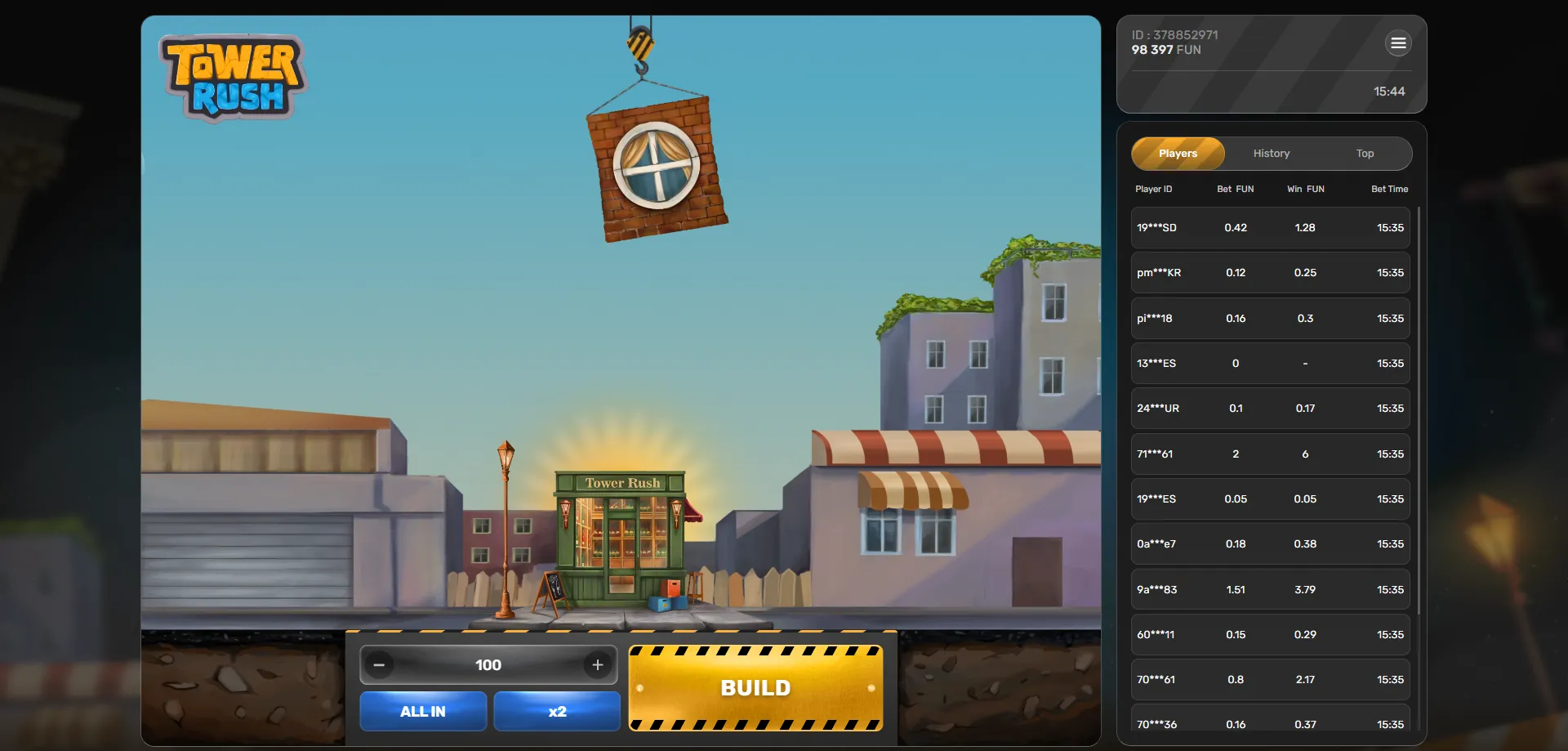
Before you can place your first stake in Tower Rush, you need an account at a licensed online casino that carries the Galaxsys game catalogue. The process is straightforward and takes less than five minutes. Here is a clear sequence to follow if you are playing from India for the first time:
If you want to learn how to play Tower Rush game without risking money first, the demo mode replicates the full real-money experience using virtual credits. Most platforms do not require a deposit to access it, though some ask for a registered account before granting demo access. Using the demo for at least ten rounds before switching to real money is strongly recommended — it gives you a feel for how fast the multiplier climbs and how abruptly a round can end.
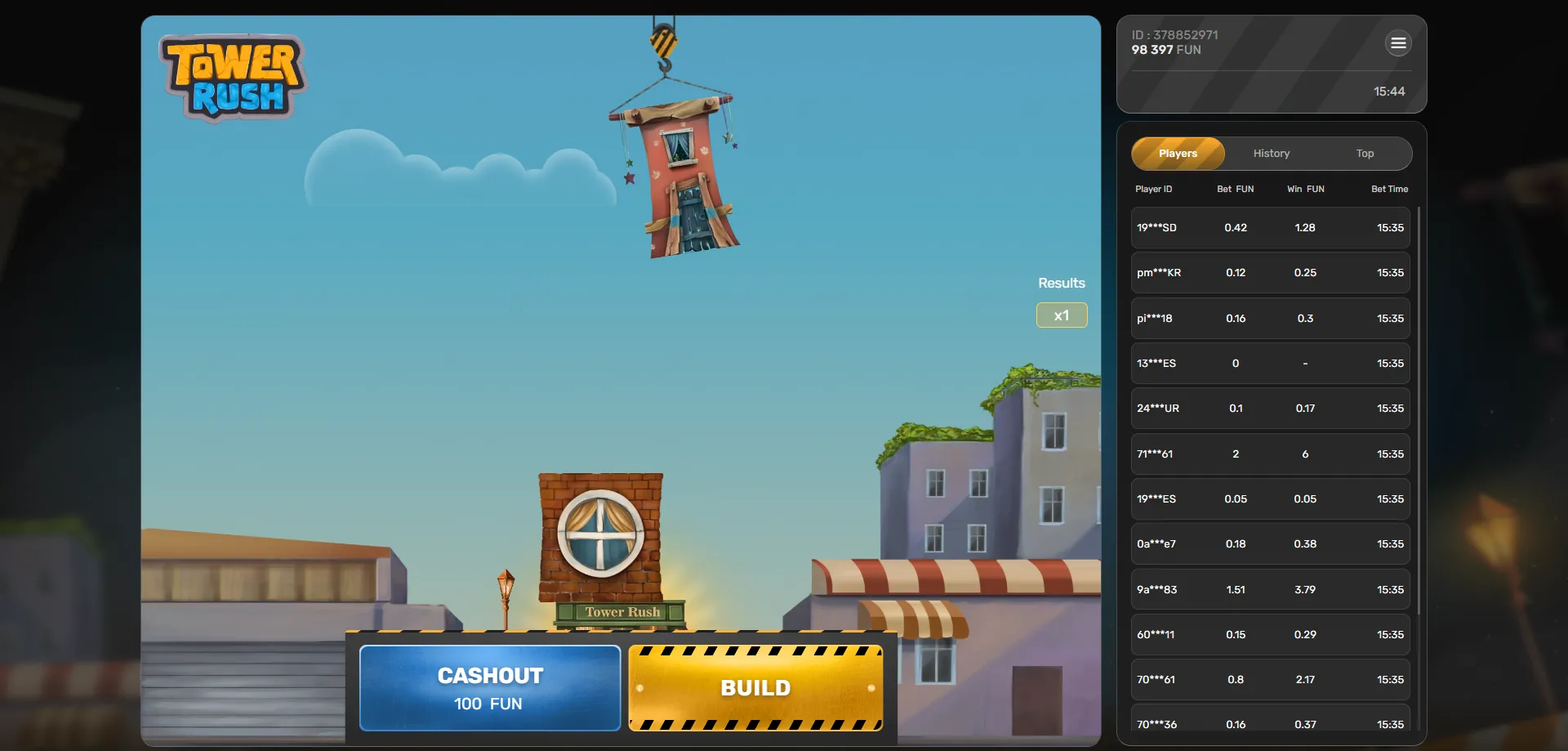
Understanding the Tower Rush interface is essential before you wager a single rupee. The layout is deliberately minimal — there are no reels, no paylines, and no spinning symbols. Every element on screen serves a direct mechanical purpose.
The central display shows a virtual tower building upward in real time. Each floor added corresponds to a rising multiplier. The multiplier counter, usually displayed prominently at the top or centre of the screen, starts at 1× when a round begins and climbs continuously until the tower collapses. That collapse point is determined before the round starts by a certified random number generator (RNG) — you cannot influence it, only react to it.
The key controls you will interact with on every round are:
The payout formula is simple: Stake × Multiplier at Cash-Out = Payout. If you stake ₹100 and cash out at 3.5×, you receive ₹350. If the tower collapses at 3.4× before your cash-out registers, you lose the ₹100 stake. There are no partial payouts — it is a binary outcome every round.
One detail that catches new players off guard is the round timing. You cannot place or adjust a bet while a round is in progress. Bets are confirmed during the brief countdown window between rounds. Missing that window means waiting for the next round to start. Keep this in mind so you are not caught flat-footed.
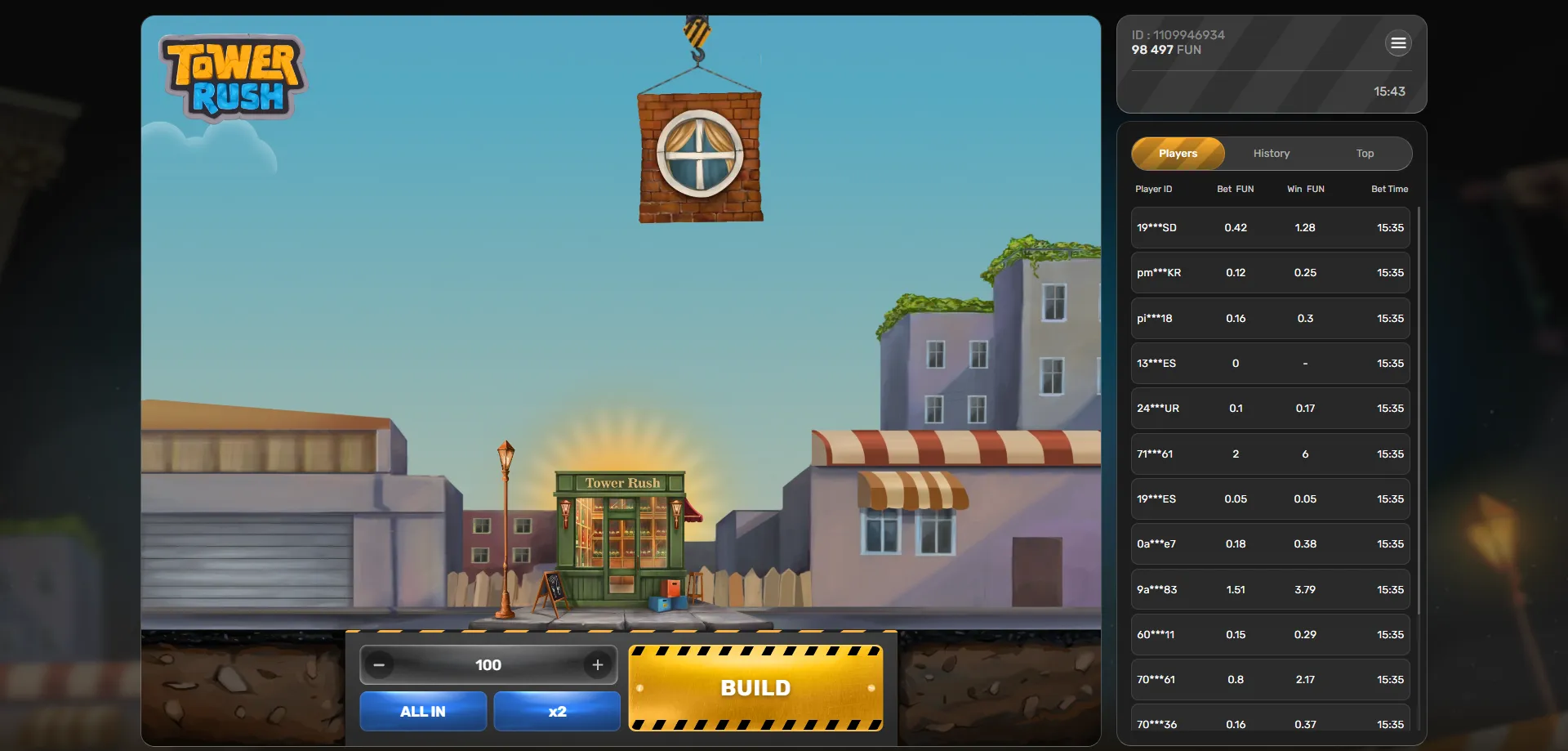
Tower Rush separates itself from generic crash titles through three unique bonus floors that trigger randomly during gameplay. These are not purchasable — there is no bonus-buy option. All three are activated exclusively by the game's RNG, which means you cannot schedule or force them. Here is what each one does:
The Frozen Floor is the most talked-about mechanic in Tower Rush. When it activates, it creates a temporary safety checkpoint at a specific floor level. If the tower collapses below the frozen floor during that round, the game does not count it as a full crash for players who have not yet cashed out — instead, your position is preserved at the frozen floor's multiplier value. Think of it as a partial safety net in a game that otherwise has none. Players reviewing Tower Rush consistently cite the Frozen Floor as a game-changer compared to other crash titles, because it introduces a rare element of protection without requiring any action from the player.
The Temple Floor activates as the tower reaches certain height thresholds and applies a multiplier boost to the active round. The exact boost varies per activation, but the effect is a faster or steeper climb in the multiplier value for a defined stretch of the tower build. If you are holding a position during a Temple Floor activation, your potential payout accelerates beyond the standard curve for that window.
The Triple Build feature causes the tower to rise at three times its normal construction speed for a short phase. This compresses what might normally be a slow climb into a rapid multiplier surge. The risk is that the collapse point — still RNG-determined before the round started — can arrive just as suddenly. Players targeting higher multipliers may find Triple Build useful context for when to hold slightly longer, though the underlying crash probability remains unchanged.
None of these bonus floors alter the fundamental cash-out mechanic. Your finger still needs to hit the button — or your auto cash-out threshold still needs to be set — before the collapse point arrives. The bonuses adjust the conditions around a round, not the core rules.
Many players who are learning how to play Tower Rush for the first time make the same set of avoidable errors. Recognising them before you fund an account will save you money and frustration.
Tower Rush carries high volatility. Rounds can end at 1.1× just as easily as they can reach 20×. If you enter every round targeting 10× without a clear bankroll plan, a sequence of early crashes will deplete your session budget in minutes. A practical starting approach is to set your auto cash-out at 1.5×–2× for your first twenty rounds. The returns are modest, but the hit frequency at those levels is meaningfully higher, giving you more rounds of experience per unit of stake.
Manual cash-out timing feels intuitive, but it introduces a well-documented psychological trap: the higher the multiplier climbs, the harder it becomes to press the button. Players consistently hold too long because the rising number feels like momentum. The auto cash-out removes this bias entirely. Set your threshold before the round starts, let the game execute it mechanically, and remove emotion from the equation.
Because rounds in Tower Rush complete in seconds, it is easy to place twenty rounds in a minute without noticing. Staking 10%–20% of your session budget per round means a short losing streak can end your session before the bonus floors even appear. Limiting individual stakes to 1%–3% of your total session budget gives your bankroll the depth to survive the high-volatility stretches that are a guaranteed feature of this game.
Tower rush game kaise khele is a question best answered with hands-on demo time, not theory alone. The demo mode is a free, full-fidelity replica of the real-money game. Ten to fifteen rounds in demo mode will teach you more about the pace, the crash frequency, and the feel of the cash-out moment than any written guide — including this one.
If your internet connection drops mid-round while a bet is active, the outcome of that round was already determined before it started. Most licensed casinos will resolve the round based on the RNG result and credit or deduct accordingly once your connection restores. If you had an auto cash-out set, it will trigger at your threshold regardless of whether you are connected. Playing over an unstable 3G signal without using auto cash-out means you are betting on your connection as much as on the game.
For players who want to go deeper on timing and multiplier strategy after reading this guide, the Tower Rush Strategy – Tips and Tricks to Win page covers bankroll models and target-multiplier analysis in detail. If you want to explore the mechanics in a zero-risk environment first, the Tower Rush Demo – Play Free with No Download page lists every platform currently offering free play. For a concise reference on the official rules and payout structure, see the Tower Rush Rules – How the Game Works page.
Sign up today to receive an exclusive multiplier boost on your first deposit and start scaling the Tower Rush leaderboards.
🎯 Play Now🔒 18+ · T&C Apply · Play Responsibly